
Tucson Directory Collections
Tucson's historical directory shelf is a network, not one complete run in one building. The earliest named volume is G.W. Barter's 1881 Directory of the City of Tucson. Later titles widened and narrowed their reach, combining Tucson with Tombstone, southern Arizona, Pima County, or Santa Cruz County. Publication was sporadic through the 1890s and became nearly annual after 1899. The Pima County Public Library, Arizona Historical Society, Arizona Memory Project, and licensed genealogy collections together provide access to every published Tucson year through 2003, though no one institution holds every form in the same way.
| Collection | Years | Where Held | Access |
|---|---|---|---|
| Barter city directory | 1881 | Arizona Memory Project and AHS | Free PDF; reprint also cataloged |
| Territorial and business runs | 1883 to 1907 | Arizona Memory Project | Free digitized volumes |
| Later Tucson city directories | 1917 through 2003, with gaps | Valdez Main Library, AHS, and online collections | Print, microfilm, or licensed access |
| Reverse and criss-cross books | Selected later years | Valdez Main Library | In person or limited phone lookup |
| Newspapers and obituaries | 1859 onward by collection | PCPL eLibrary and AHS | Library card or archive access |
Coverage gaps need context. Some years were never published. Other physical gaps arose because publishers rented criss-cross books and later reclaimed them. An absent book cannot prove that a family left Tucson. Use the nearest volumes, then bridge the interval with a census, newspaper, deed, telephone book, or map. The exact collection matters as much as the year because a territorial business directory answers a different question from a household listing.
Tucson's 1881 City Directory
G.W. Barter's first volume is both a name list and a civic portrait. It includes residents, trades, homes, city and county officials, federal officers, Fort Lowell personnel, schools, churches, societies, banks, and newspapers. Address wording suits a territorial town rather than a modern postal database. A location may be described by street, landmark, or local relation. That makes the surrounding pages vital evidence, especially when the same surname appears more than once.
The Arizona Memory Project's Tucson city directory collection shows the digitized search and browse environment.
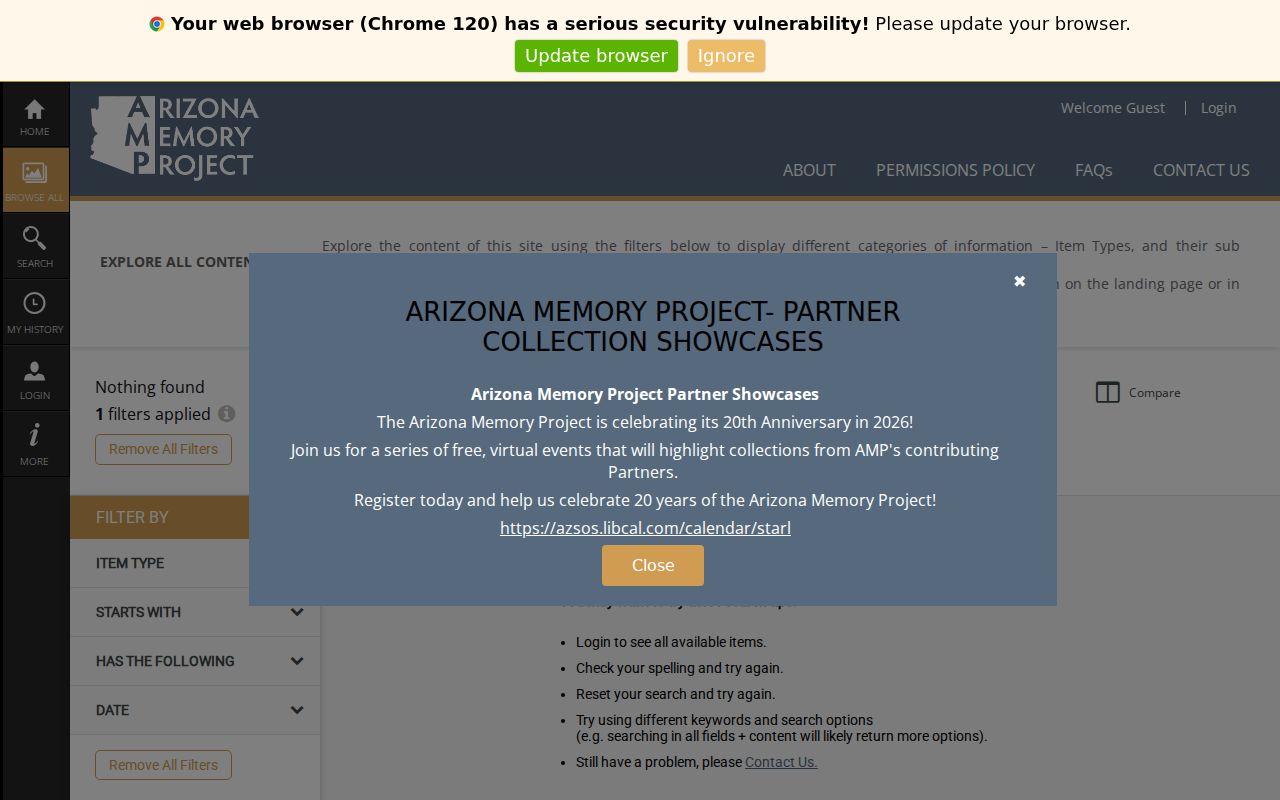
The collection view helps separate a specific volume from the broader set, preventing a date or publisher from being attached to the wrong Tucson entry.
Reading Tucson Directory Entries
A short line can hold several facts. Start with the exact printed name, including initials and surname order. Tucson's Spanish and Mexican naming traditions may place paternal and maternal surnames in patterns that an English-language index handles poorly. Older volumes may omit accents, shorten given names, or Anglicize them. Record what is printed before testing a second spelling. Later Polk-style listings may add a spouse in parentheses, a trade or firm, a street number, an ownership mark, a widow notation, or a cross-reference.
| Name | The printed resident name, initials, surname order, and any cross-reference |
|---|---|
| Household clue | A spouse in parentheses or a widow notation in later editions |
| Work detail | An occupation, employer, business role, or institutional tie |
| Place | A residence description or later street number and name |
| Status mark | A publisher-specific ownership or residence code, when supplied |
Never assume a code means the same thing in every edition. Photograph or save the title page and abbreviation page with the entry. Those pages identify the publisher, date, scope, and code system. A directory is a publisher's snapshot, so lag, nonresponse, misspelling, and omission are normal limits.
- Criss-cross directory
- A reverse section arranged by street address or telephone number instead of surname.
- Householder index
- A list centered on the named person responsible for a listed household, not a full census of all occupants.
- Abbreviation key
- The volume's own code list for trades, address terms, spouse notes, and other short forms.
Tucson City Directories Online
The Arizona Memory Project currently reports 37 Tucson directory objects. Its digitized titles include the 1883 to 1884 Tucson and Tombstone general and business directory, a 1901 volume whose title claims about 4,000 citizen names, the 1902 Tucson and southern Arizona business directory, the 1903 to 1904 Pima County territorial directory, and the 1906 to 1907 Skinner directory. Later scanned years include 1917, 1921, 1922, 1928, runs in the 1930s and 1940s, and other volumes.
The Pima County Public Library history of Tucson directories explains the changing publication pattern and what the shelf can reveal.
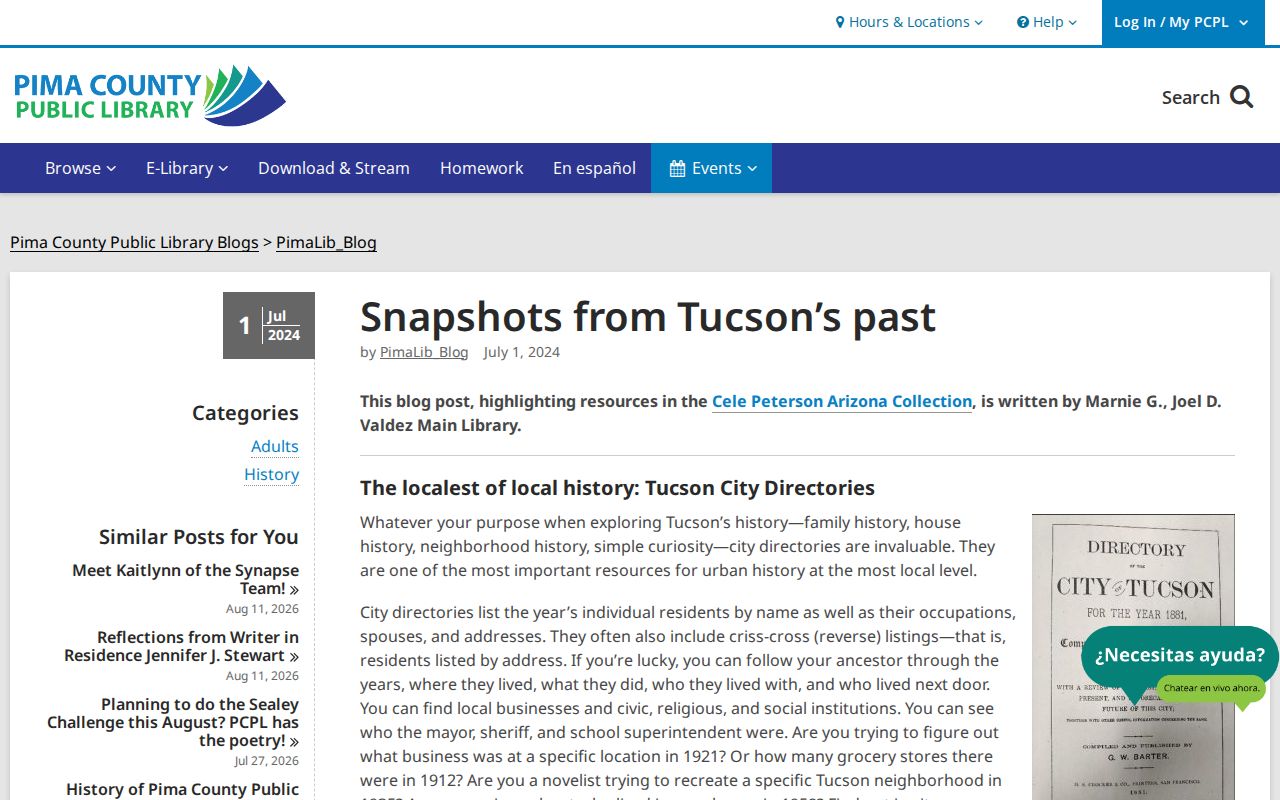
The library account supplies the local context that a scan alone lacks, including why gaps occur and how the latest volumes changed.
Tucson Library Directory Desk
The Cele Peterson Arizona Collection at Joel D. Valdez Main Library is the practical physical hub. The third-floor reference desk provides Tucson directories and local history works for reading, copying, or photography. Fragile Arizona Collection items stay on that floor. The collection is open to all researchers, not just cardholders, although licensed databases may have card or in-building rules.
Remote help is unusually concrete. PCPL Infoline at 520-791-4010 will perform up to three criss-cross address or telephone lookups. That service is useful when travel is not possible or when one known address needs a quick check before a longer archive visit. Reference Solutions accepts partial names and addresses for current research with a library card. In-library Ancestry, HeritageQuest, HeritageHub obituaries, Access World News, and the Arizona Digital Newspaper Program extend the trail beyond the printed line.
The PCPL city directory service page sets out the criss-cross choices and access routes.
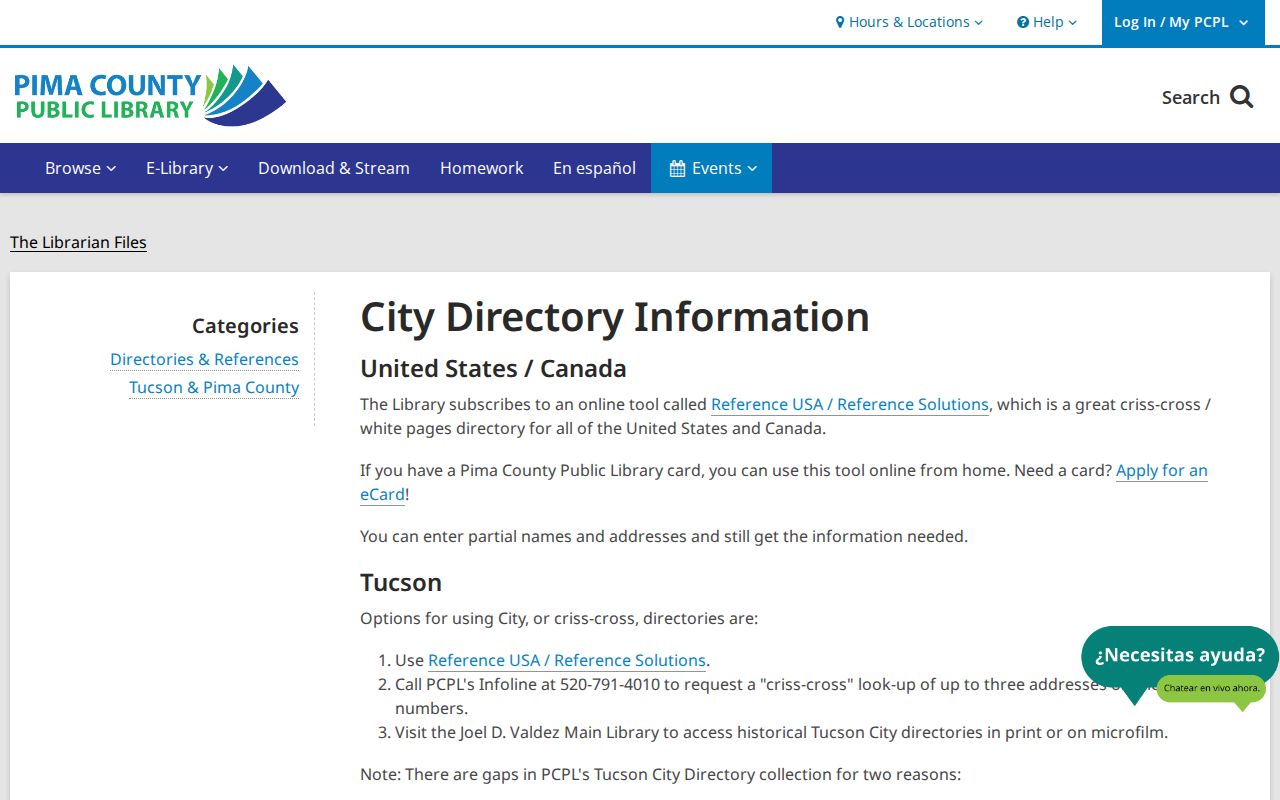
The service details turn a broad library search into a precise request for one name, address, phone number, or available year.
Note: Ask for the nearest available years when an exact volume is missing, then compare both sides of the gap.
Tucson Criss-Cross Directory Gaps
Reverse directories solve an address question that the alphabetical section cannot. Start with the street, locate the number range, and read nearby listings. This can identify the published householder and show the named neighbors around an ancestral address. It does not prove that every person in the dwelling was listed. Children, lodgers, relatives, and others may be absent.
The local quirk matters: many criss-cross volumes were rentals that publishers took back. A missing reverse book may reflect that business model, not neglect and not a lost household. Compare an alphabetical entry, a telephone book, a parcel deed, and a census before drawing a conclusion. For current address-keyed records, shift to the Tucson streets directory rather than forcing a historical volume to answer a modern parcel question.
Tracing Tucson Families by Directory
Build the trail one dated observation at a time. Do not merge two people because their names look alike. A spouse, middle initial, trade, business alias, or street can separate them. Census schedules add full household members, age, birthplace, and other detail that a directory usually omits. In 2026, the 1950 census is the newest public individual federal census under the 72-year rule.
- Find the surname in one dated volume. Copy the whole entry and the publisher's abbreviation key.
- Check the prior and next available Tucson volumes. Track name form, spouse, trade, and address separately.
- Use the reverse section to test the address and see nearby published householders.
- Pair observations near 1900, 1910, 1920, 1930, 1940, or 1950 with the matching census household.
- Use deeds, newspapers, obituaries, probate, and maps to explain a move, death, or long gap.
Disappearance has several possible causes. The person may have moved, died, declined to be listed, changed a surname, entered an institution, or simply fallen into a publication gap. A widow notation can narrow a death interval, but a death index or obituary should confirm it. A new address may mark a move, while a deed can show whether the person owned the site. These independent records keep the directory trail from becoming guesswork.
Tucson Health-Seekers in Print
Tucson's health-migration era creates entries that can look like household moves when they are not. PCPL's directory research follows sanitariums and hospitals whose names changed or vanished. St. Mary's dates to 1880 and had an isolation cottage by 1900. St. Luke's began in 1917. Barfield at 2108 E. Speedway became Oshrin Hospital in 1952, while the federal medical center opened in 1928.
A resident listed at one of these institutional addresses may have been a patient, staff member, visitor, or associated professional. Read the occupation and the institution's directory advertisement or front matter before assigning a role. The Arizona Historical Society and University of Arizona Special Collections can add manuscripts, photographs, oral histories, maps, and community collections. Those sources are especially useful when directory spelling or scope obscures O'odham, Mexican-American, Chinese, African American, Jewish, railroad, or military lives.
Tucson Directory Years in Context
The long run spans territorial Tucson, statehood, wartime growth, postwar subdivisions, and a final era in which printed directories changed their content. A brief chronology helps place each entry in the right records landscape.
- 1881: Barter publishes Tucson's first known city directory, including Fort Lowell and civic institutions.
- 1880s to 1890s: Publication remains intermittent and titles vary in geographic reach.
- After 1899: Tucson directory publication becomes nearly annual.
- 1951 to 1970: Front matter records publisher snapshots of phones, cars, media, lodging, and theaters.
- 2003: The last locally described resident volume drops occupations but adds street maps, carrier routes, and neighborhood data.
The front matter can rebuild the city around a person. Figures such as 37,603 telephones and 54,000 automobiles in the 1951 volume are publisher claims for that date, not present statistics. In the same way, the 1963 and 1970 counts of media, lodging, ranches, and theaters describe how that publisher framed Tucson in those editions.
Tucson's Last Printed Directory
The 2003 endpoint did not erase later residents. It marks a change in source type. That edition still names individuals, yet it omits occupations and adds street-by-street mapping, carrier routes, and neighborhood demographic material. After that run, current research shifts toward licensed directory databases, parcel records, official business and license records, and direct contact, while historical work stays rooted in the preserved books.
Treat every volume as a dated claim. Save its year, title, publisher, page, and entry wording. Then cite the second record that confirms the identity or event. That habit preserves the Tucson city directory's unique value without asking it to prove facts it was never designed to record.