
Tucson Previous Residents by Era
A backward address trail changes sources as it crosses time. Modern title transfers are strong online, earlier deeds require more office work, and published directories can add people who never appear in title. Census schedules provide household context at long intervals, while maps and permits explain the building around those names.
| Source | Years it covers | Where held | What it shows |
|---|---|---|---|
| Recorder indexed deeds | June 1982 to present | Pima County Public Search | Transfers, parties, dates, legal description |
| Historic recorded books | 1865 to May 1982, partly indexed | Recorder offices and terminals | Older deeds, mortgages, liens, and plats |
| Tucson directories | First in 1881; near annual after 1899; through 2003 | PCPL, AHS, AMP, and licensed collections | Named occupant, spouse, work notation, address |
| Reverse directories | Selected twentieth-century years | PCPL and reference services | Address to published occupant and nearby listings |
| Federal census | Decennial individual schedules through 1950 | NARA and library databases | Household members, age, birthplace, and related details |
| Tucson Sanborn maps | 1883, 1886, 1901/1904, 1905/1914, 1919, 1948 | LOC, AHS, and UA | Footprint, use, material, and period street number |
| Building permits | Online coverage varies | PRO and PDSD request channel | Construction activity, dates, parties, and plans |
Start with the newest source that clearly identifies the parcel. Then work backward. A question about previous residents in the late twentieth century may move from deed to reverse directory, while a territorial-era question depends more on recorded books, maps, and early directories.
Trace Tucson Previous Resident Owners
Recorded instruments are usually indexed by party and legal description, not by a modern street address. The Pima County Assessor therefore supplies the right starting facts: present vesting, parcel ID, situs address, mailing address, and legal description. Vesting means the name or names in which title is held.
- Copy the current title name and complete legal description from the parcel card. Save old parcel numbers shown in linked records.
- Search the Pima County Recorder for the current owner as grantee. Find the acquisition deed and match the land description.
- Copy the seller, who appears as grantor. Search that person or entity as an earlier grantee in the preceding date range.
- Repeat the seller-to-buyer sequence. Confirm each link with lot, block, subdivision, or metes-and-bounds detail.
- Before the complete online index, move to Recorder terminals, images, and recorded books. Keep the same party and land clues.
This process identifies past owners, not all past residents. A family member or other occupant may leave no title record, while an owner may receive tax mail somewhere else.
Read Tucson Resident Deed Language
Deed terms describe roles and land. Defining them before the search prevents a backward chain from reversing direction or jumping to a different parcel.
- Grantor
- The party transferring an interest in the recorded instrument, often the seller in a deed.
- Grantee
- The party receiving the interest, often the buyer whose earlier acquisition leads to the next search.
- Chain of title
- The linked sequence of recorded transfers for the same land.
- Legal description
- The title description of the land, which is more durable than a street number.
- Criss-cross directory
- A directory ordered by address or telephone number rather than by surname.
Names can be common, misspelled, abbreviated, or shared by relatives. The legal description is the control that keeps a search tied to the same Tucson site.
Tucson Resident Deeds Before Indexing
Every recorded Pima County document from June 1982 forward is indexed. Historic county material reaches 1865, but older name indexing is still in progress. Public computers at both Recorder offices allow access to unindexed images. This boundary is an access change, not a gap in the existence of all earlier records.
Online index data and free watermarked images support initial research. A clean official image is paid. The downtown research office is at 240 N. Stone Avenue and operates Monday through Friday from 8 a.m. to 5 p.m. Limited eastside service is at 6920 E. Broadway Boulevard, Suite D, from 8 a.m. to 4:30 p.m., with a noon to 1 p.m. closure.
A mailed order can also go to P.O. Box 3145, Tucson, AZ 85702-3145. Original-document orders by email are normally allowed two days and mailed orders seven days. The Recorder does not notarize.
Note: An older deed that is absent from the web name index may still survive as an office image or book entry.
Pair Tucson Resident Directories and Census
Address-based directories turn the title trail into a household trail. PCPL’s Infoline at 520-791-4010 performs up to three criss-cross address or telephone lookups. Physical volumes are available at the Joel D. Valdez Main Library’s third-floor reference desk. The collection can be read, copied, or photographed, though fragile Arizona Collection items remain on that floor.
- Choose a directory year close to a deed transfer or known family event.
- Use the reverse section to find the address, then copy the named occupant and nearby address sequence exactly.
- Check the alphabetical entry for spouse, initials, occupation notation, widow notation, and cross-reference.
- Repeat in the next available years and bracket when a name appears or disappears.
- Pair 1900 through 1950 directory observations with the matching public census schedule, allowing for spelling and address variation.
The federal 72-year rule makes 1950 the newest public individual census in 2026. Detailed publisher and shelf coverage belongs to the Tucson city directories resource; the backward trail uses those volumes only after the parcel and likely era are known.
Why Tucson Past Residents Disappear
An absent directory entry is not proof that someone left the address. Tucson directories were intermittent before near-annual publication began after 1899. Some years were not issued. PCPL also explains that many criss-cross books were rentals later reclaimed by publishers, leaving gaps in local holdings.
Entries were compiled snapshots. Nonresponse, publication lag, initials, surname variants, and changes in spelling all affect a search. Spanish and Mexican naming customs may place paternal and maternal surnames in forms that an old Anglo index shortened or reordered. Search both surname orders, initials, spouse names, accents omitted by an index, and known business aliases.
This local quirk changes the burden of proof. A gap calls for another source, such as a deed, census page, tax roll, newspaper, telephone book, or obituary. It should never be turned into a firm move date by itself.
Map Tucson Previous Residents
Sanborn fire-insurance maps help when a street number no longer matches. Compare the block shape, alley, lot, neighboring buildings, construction material, use, and cross streets. If the footprint aligns, carry the historic number into a directory search while retaining the modern parcel description.
The 1901 Tucson Sanborn volume contains 22 sheets. Other locally documented editions cover 1883, 1886, 1905 corrected through 1914, 1919, and 1948. No authoritative comprehensive citywide renumbering year or index was located, so individual visual matches are safer than a broad claim.
Maps describe the site at a date. They rarely name every person. Their value is continuity: the same lot and footprint can bridge two address labels so the correct directory and deed entries can be compared.
Date Tucson Resident Address Changes
Tucson Property Research Online can show permit or request number, status, application and completion dates, type, narrative, and available documents. It also identifies jurisdiction. That check matters because a Tucson postal address can fall outside City of Tucson limits.
For older files missing online, Planning and Development Services instructs users to check PRO, create a Tucson Development Center Online account, and choose Request Historic Records. Each address is entered separately. The Description field uses DOCS, PLANS, or BOTH/ALL, and the city reports typical completion within four weeks.
A permit dates work on the building. It does not establish the day a past resident arrived or left. Used beside a directory change, deed, or newspaper notice, however, it may explain a new addition, use, or address configuration.
Close Tucson Previous Resident Trails
Obituaries and probate files can close the trail for a person who died after living at the address. An obituary may identify relatives, alternate names, institutions, or a later city. Probate may show heirs and estate transfers. The statewide court portal excludes probate, so local Pima County Clerk of the Superior Court access is the proper court fallback.
The Pima County Public Library genealogy collection routes researchers to obituary tools, newspapers, census sources, and historic vital certificates.

The library screen represents the wider evidence set needed to distinguish a same-name person and follow the family beyond one address.
Unclaimed property may preserve another later clue under a former resident’s name. The Arizona Department of Revenue search allows a free search and starts a claim process.
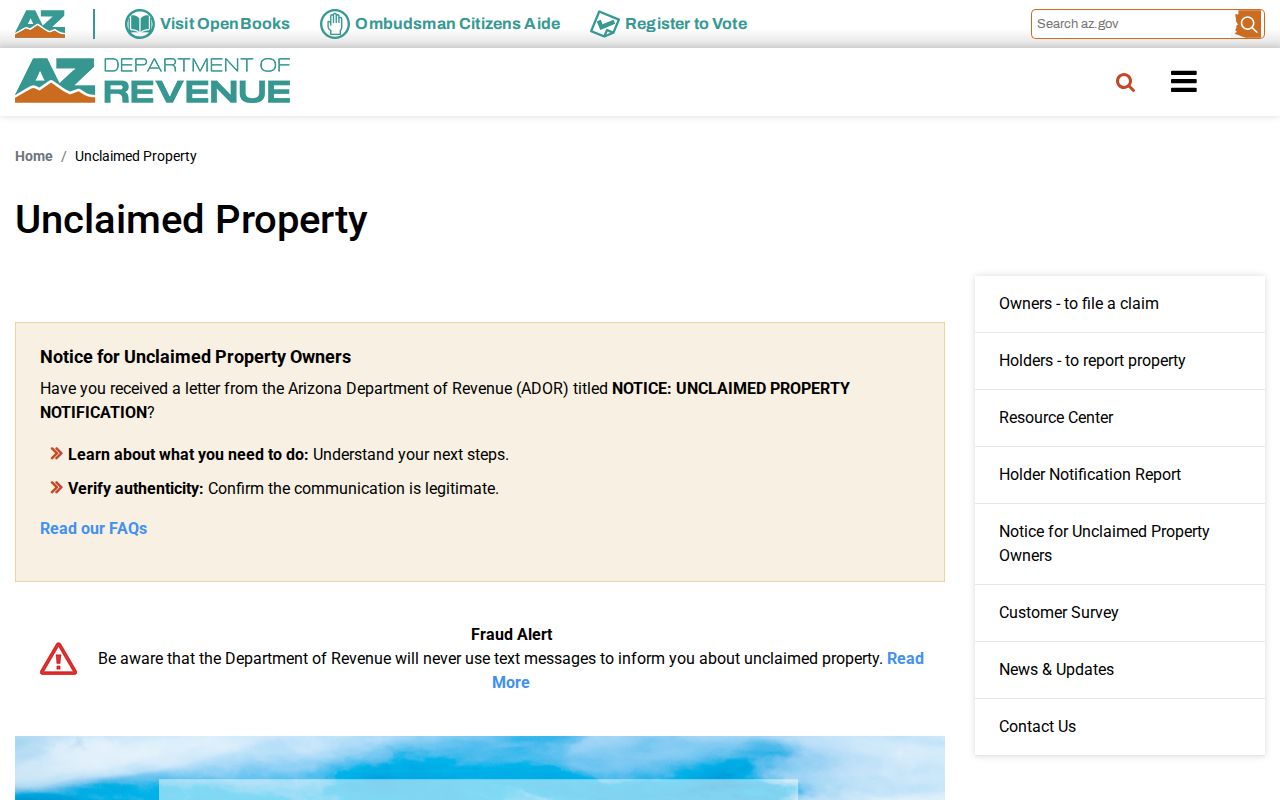
A matching name is not identity proof. Compare it with the directory, deed, probate, or obituary record before connecting it to the Tucson address.
Tucson Previous Residents and Privacy
Current Arizona vital certificates are restricted to eligible applicants under A.R.S. §§36-324 and 36-342. Archival access follows a different clock. Birth records transfer for public archival access after 75 years, and death records after 50 years under A.R.S. §36-351.
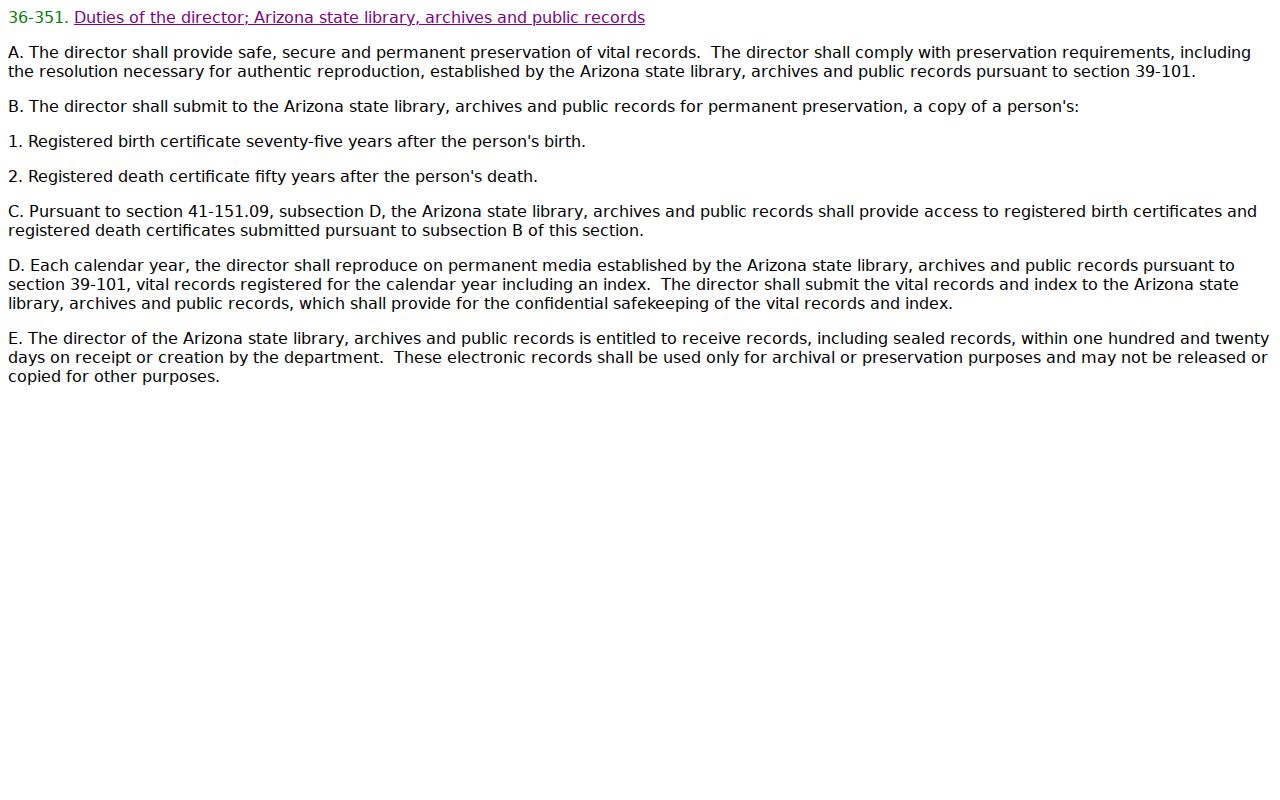
The statute helps separate a public historic record from a restricted current certificate. It does not make every recent family document available.
Arizona’s Address Confidentiality Program and protected government records can also prevent an address from appearing. Respect that result. A commercial listing may be stale, inferred, or copied from an earlier source, while a custodian record may have been lawfully shielded.
Lawful use. Research Tucson previous residents for family history, property history, heirs, or personal curiosity. Never use a record to track, stalk, harass, or harm a living person.